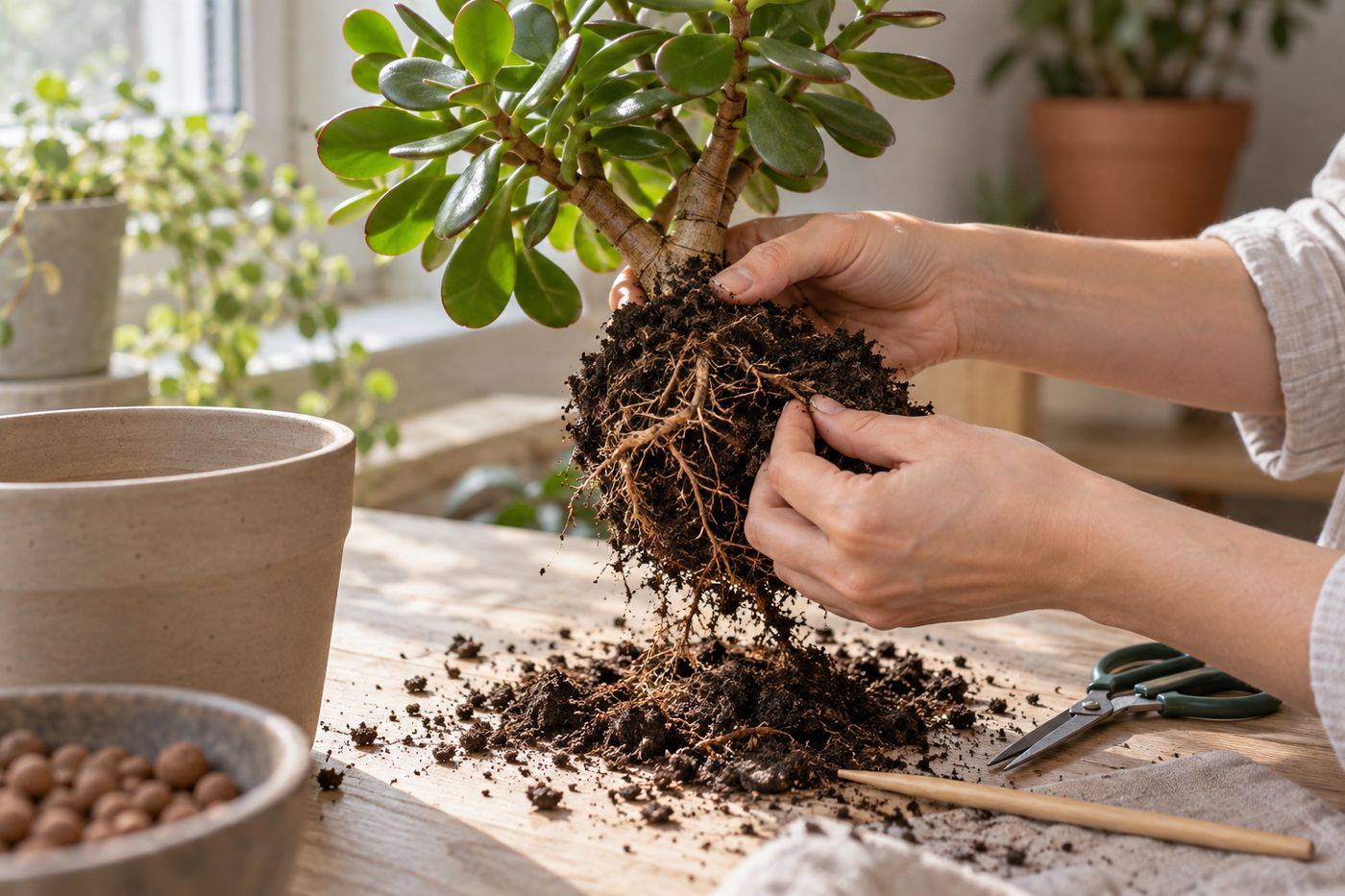
How to repot a jade plant: when it needs it, why a wide heavy pot beats a deep one, the right gritty mix, dry repotting step by step and how to save rotted roots.
6 Updated October 15, 2026
By the FloraFact editorial team · How we researchPublished October 15, 2026 · Updated October 15, 2026
How often
Every 2-3 years young, 4-5 years mature
Best time
Spring, as growth starts
Pot
Wide, shallow, heavy, 1-2 in wider, drainage hole
Mix
Cactus mix + 30-50% perlite or pumice
First watering
5-7 days after repotting
Pets
Toxic to dogs, cats, horses (ASPCA)
Repot a jade plant (Crassula ovata) in spring, into a wide, heavy pot only 1-2 in larger, filled with fast-draining cactus mix, working with dry soil and waiting about a week before the first watering. Most jades need this only every 2-3 years when young and every 4-5 years once they are old, woody shrubs.
Jade is forgiving about almost everything except wet roots, so nearly every rule below is about keeping the root zone dry and the plant upright.
The plant tips or the pot topples. Jade puts on heavy, water-filled branches; a plant in a light plastic pot often falls over before it is root-bound.
Roots out the drainage hole or a solid mat when you slide the plant out.
The mix has collapsed. Old peat shrinks, pulls from the pot walls, and either sheds water or stays soggy.
Rot. Soft, wrinkled leaves despite wet soil, a blackened stem base or a sour smell. Repot immediately, any season.
Wrinkled leaves with dry soil just mean thirst, not repotting. Water first and see if they plump up within a few days.
Choosing the pot
Jade roots are fine and shallow, while the top can grow to 3 ft or more indoors and weigh a lot. The library recommends shallow pots rather than deep ones, and the physics agrees:
Pot feature
Why
Wide and shallow (bonsai or "azalea" pot)
Matches the root system; no deep wet zone below the roots
Heavy: terracotta, stoneware, concrete
Counterweight for a top-heavy plant
Unglazed terracotta
Wicks water out through the walls; mix dries faster
Only 1-2 in wider
Less unused wet mix
Drainage hole
Non-negotiable; no gravel "drainage layer" instead
Iowa State University Extension notes that succulents often thrive in slightly small containers because the soil dries quickly, and warns that oversized pots take too long to dry.
If a big old jade is already in its largest practical pot, root-prune instead (below) and return it to the same container.
The right mix
The RHS recommends growing it in cactus compost in full light. US bagged cactus mixes are often still peat-heavy, so open them up further. Iowa State suggests roughly one-third organic to two-thirds mineral material for succulents.
A practical recipe:
1 part bagged cactus and succulent mix
1 part perlite or pumice (pumice adds weight, a bonus for jade)
optional: a handful of coarse sand or fine poultry grit
Squeeze a moistened handful: it should crumble apart, not form a ball. More on mixes in potting soil for houseplants.
How to repot a jade plant, step by step
Let the plant dry out for 3-5 days beforehand. A dry root ball slips out easily and dry roots break less. Leaves stay firm because they store water.
Free the plant. Lay the pot on its side, squeeze or tap it, and ease the plant out by the base of the trunk. Jade branches snap easily; support the canopy with your other hand or a helper. (Any broken pieces root easily as cuttings.)
Clean the roots.
Tease off old, compacted mix with your fingers or a chopstick, especially if it was soggy peat. Healthy roots are light tan and firm.
Trim. Cut away any dark, mushy, hollow roots with clean scissors. On an old plant at its final pot size, you can also shorten the outer roots by up to a quarter.
Set the plant on a layer of dry mix so the trunk sits at the same depth as before, about 1/2-1 in below the rim. Planting deeper puts the trunk in damp mix.
Fill with dry mix, tapping the pot to settle it. Firm gently around the trunk so it stands upright; a heavy plant may need a short stake for a few weeks.
Don't water yet. Put the plant in bright light, out of harsh afternoon sun, and wait 5-7 days, then water thoroughly until it drains.
Saving a jade plant with root rot
If the roots are brown and mushy, the stem base is soft or the plant collapses:
Remove all wet mix; rinse the roots so you can see everything.
Cut away every soft root and any soft, discolored trunk tissue back to firm, pale green wood. Disinfect scissors between cuts.
Air-dry the plant somewhere shaded and airy for 2-5 days until cuts are dry.
Pot into fresh, dry gritty mix in a clean or new pot; wait a week to water.
If the trunk is rotted through, take healthy branch tips as cuttings and restart.
The general steps are in root rot.
Aftercare
Light: return it to its sunny window after a few days. Jade wants direct sun for several hours a day.
Water: after the first drink, water only when the mix is dry throughout, often every 2-3 weeks in summer and monthly in winter. See the jade plant care guide.
Fertilizer: none for 4-6 weeks; then a diluted cactus fertilizer once a month from spring to late summer, as the RHS suggests monthly feeding in the growing season.
Winter: keep it cool, about 50-60°F, and on the dry side. The UW library notes cooler winters around 50-55°F suit it.
A little leaf drop after repotting is normal. Ongoing yellowing, soft leaves or a wobbling trunk mean the mix is staying wet - check it again.
Pet safety
The ASPCA lists jade plant as toxic to dogs, cats and horses; signs include vomiting, depression and incoordination. Repotting leaves broken leaves and stems around, so sweep up before pets explore. If an animal eats some, call your vet or ASPCA Animal Poison Control at (888) 426-4435. For a child, call Poison Control at 1-800-222-1222.
For pot and soil choices that apply to all succulents, see the general repotting guide.
Frequently asked questions
When should I repot my jade plant?
In spring, when roots fill the pot, the plant has become top-heavy and tips, or the mix has broken down and stays wet. Young plants need it every 2-3 years, old ones every 4-5. Rotting roots are an emergency at any time of year.
What kind of pot is best for a jade plant?
A wide, shallow, heavy pot with a drainage hole, ideally unglazed terracotta. Jade roots are shallow, and a heavy base stops the top-heavy plant from tipping. Go only 1-2 in wider than the old pot.
What soil should I use for a jade plant?
A fast-draining cactus and succulent mix, improved with extra perlite, pumice or coarse grit so it is about half mineral. Regular potting soil holds too much water.
Should I water my jade plant after repotting?
Not right away. Repot into dry mix, then wait 5-7 days before the first thorough watering so roots damaged in the move can callus. Then return to watering only when the mix is dry.
Do jade plants like to be root-bound?
They tolerate it well and grow more slowly when snug, which suits a windowsill plant. Repot when the plant becomes unstable or the roots have no mix left, not just on a schedule.
Can I repot a jade plant in winter?
Only to save it from rot or a broken pot. In winter jade is semi-dormant, roots regrow slowly, and fresh mix can stay damp too long.
Sources
Facts on this page were checked against these publications. Links open in a new tab.